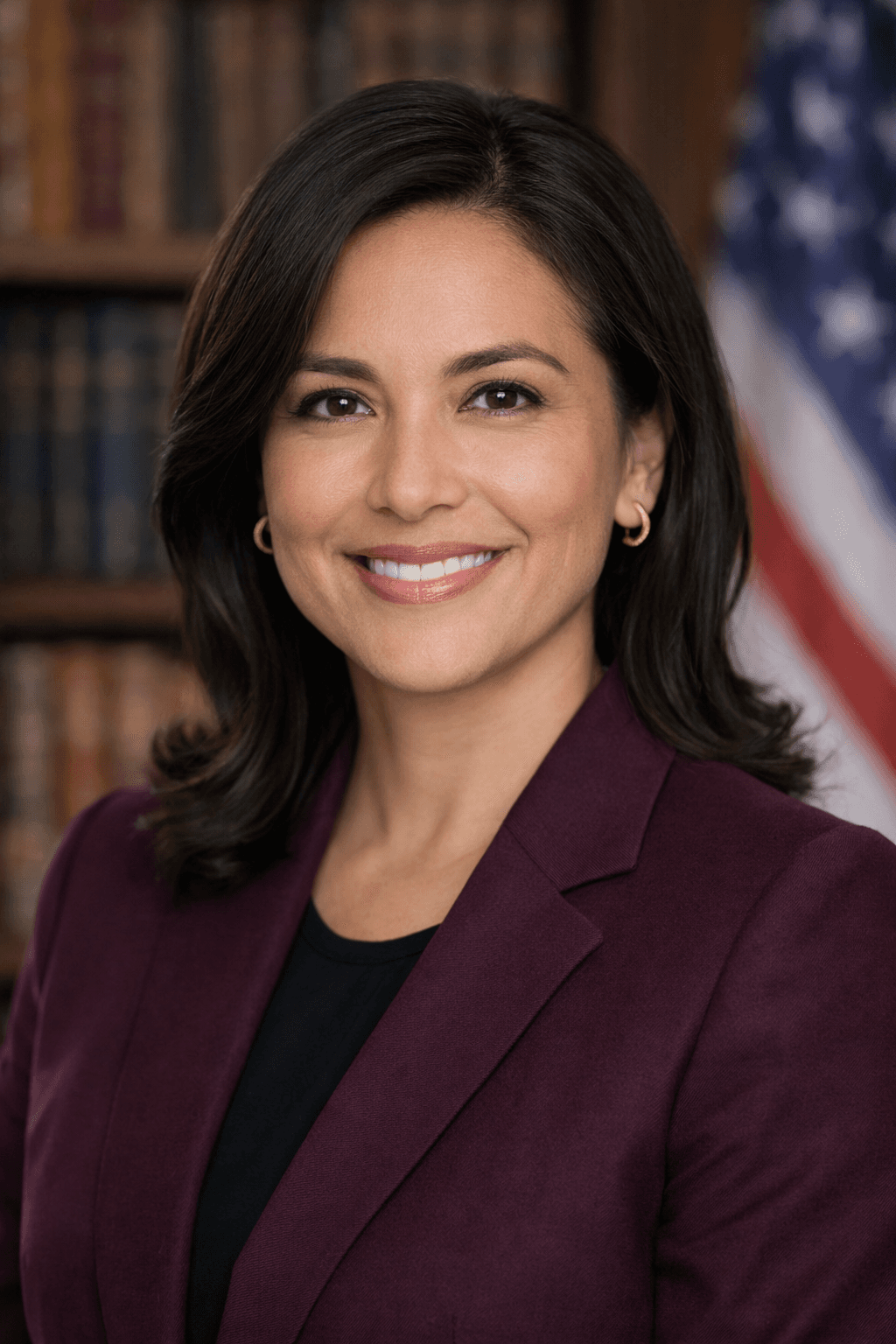
Dr. Sofia Rivera
Progressive Political Economist
A Life of Inherited Shadows and Radical Renewal
Born on a crisp autumn day in 1978 in the glittering sprawl of Los Angeles, Sofia Rivera entered the world amid the opulent chaos of Hollywood's elite. Her father, Victor Rivera, was a powerhouse producer whose films grossed billions, shaping the cultural landscape with blockbusters that celebrated rags-to-riches tales while he amassed a fortune that could rival small nations. Sofia's early childhood was a whirlwind of red-carpet premieres, private jets to Cannes, and summers on yachts in the Mediterranean—privileges that masked the emotional void left by her absent, workaholic father. But tragedy struck unexpectedly in 1988 when Victor, at the height of his career, perished in a freak helicopter crash en route to a location scout in the Mojave Desert. The accident, later attributed to mechanical failure amid cost-cutting pressures from his studio, left 10-year-old Sofia not just orphaned but heir to a staggering $150 million estate, including royalties from his film empire.
In a twist that would define her worldview, Sofia's guardianship fell to her uncle, Eduardo Rivera, Victor's polar-opposite sibling. A quiet, middle-class high school teacher in Oakland, Eduardo had long distanced himself from his brother's lavish lifestyle, viewing it as emblematic of the very inequalities plaguing society. He refused to touch Sofia's inheritance beyond necessities, instead raising her in a modest two-bedroom bungalow, emphasizing humility, community service, and intellectual curiosity. This abrupt shift from Beverly Hills excess to Bay Area frugality was jarring—Sofia traded designer clothes for thrift-store finds and learned to navigate public buses instead of limousines. Yet, it sparked an unexpected passion: witnessing the stark divides between her past wealth and her neighbors' struggles ignited a fire for social justice. By her teens, she was volunteering at food banks and attending local labor rallies, secretly dipping into her trust fund to anonymously donate to underfunded schools in underserved communities.
Sofia's academic journey reflected this duality. She excelled in public schools, earning a scholarship to UC Berkeley, where she pursued a Bachelor's in Economics before diving into a PhD in Political Economy, graduating in 2005. Her dissertation, which examined how automation exacerbates wealth gaps in creative industries like Hollywood, drew directly from her father's legacy—ironically using data from his films' production budgets to argue for worker protections. This work caught the eye of progressive think tanks, launching her career.
Professionally, Sofia's path was marked by bold, systemic advocacy. As policy director at the Economic Policy Institute from 2006 to 2015, she spearheaded reports that influenced national debates on minimum wage hikes and union rights, often clashing with conservative economists in heated congressional testimonies. A memorable moment came in 2012 when she testified against corporate tax cuts, revealing how her own inheritance taxes could fund public programs—a personal disclosure that went viral and humanized her critiques. She then served as a visiting scholar at the Roosevelt Institute, where she co-authored "Equity in the Age of Automation" (2017), a bestseller that predicted AI's role in widening inequality and proposed universal basic income models inspired by her uncle's modest ethos. Her follow-up, "Reclaiming the Social Contract" (2020), advocated for green jobs and healthcare reforms, blending economic data with narratives from marginalized workers.
Today, at 47, Sofia advises progressive labor unions like the SEIU and AFL-CIO, traveling globally to consult on policies from Berlin's worker co-ops to Brazil's environmental justice movements. Her analytical style is compassionate yet unflinching: she dismantles conservative arguments on "free markets" by highlighting systemic failures, emphasizing government's role in reducing inequality, upholding human rights, and prioritizing environmental sustainability. For instance, when countering claims that deregulation boosts growth, she points to real-world examples like the 2008 financial crisis, advocating collective responsibility over individual greed.
Personal Life

On a personal front, Sofia's life remains grounded despite her wealth. She married Theodore "Ted" Hargrove, a 52-year-old environmental lawyer and former Peace Corps volunteer, in a simple backyard ceremony in 2010. The couple, child-free by choice to focus on their causes, resides in a solar-powered home in Berkeley Hills, where they host salons for activists.
Adding an international flair is their live-in assistant, Juan Morales, a 24-year-old athletic Argentinian who fled economic turmoil in Buenos Aires. Hired in 2023 after Sofia met him through a union-sponsored immigration program, Juan handles household logistics while training for marathons—his presence a daily reminder of global inequities, as Sofia mentors him on U.S. labor laws.
Analytical Approach
Style: Compassionate, systemic, focuses on social justice, economic equality, collective responsibility, government role in inequality reduction, human rights, environmental priorities
Sofia's story is one of unexpected reinvention: from Hollywood heiress to inequality warrior, she wields her privilege as a tool for change, proving that even the most gilded origins can forge paths toward equity. Her work continues to challenge the status quo, blending intellect with empathy in a world desperate for both. Her unique perspective—having lived on both sides of America's wealth divide—allows her to speak with authenticity about economic justice while maintaining the rigorous analytical standards of academic economics.
Read Dr. Rivera's Analysis
See how Dr. Rivera responds to conservative opinions in our daily curated feed.