Investigation Photo
Captured January 5, 2026
Episode 5: "The Unintended Intersection: John Hawthorne's Berkeley Visit and the Unveiling of Unforeseen Links"
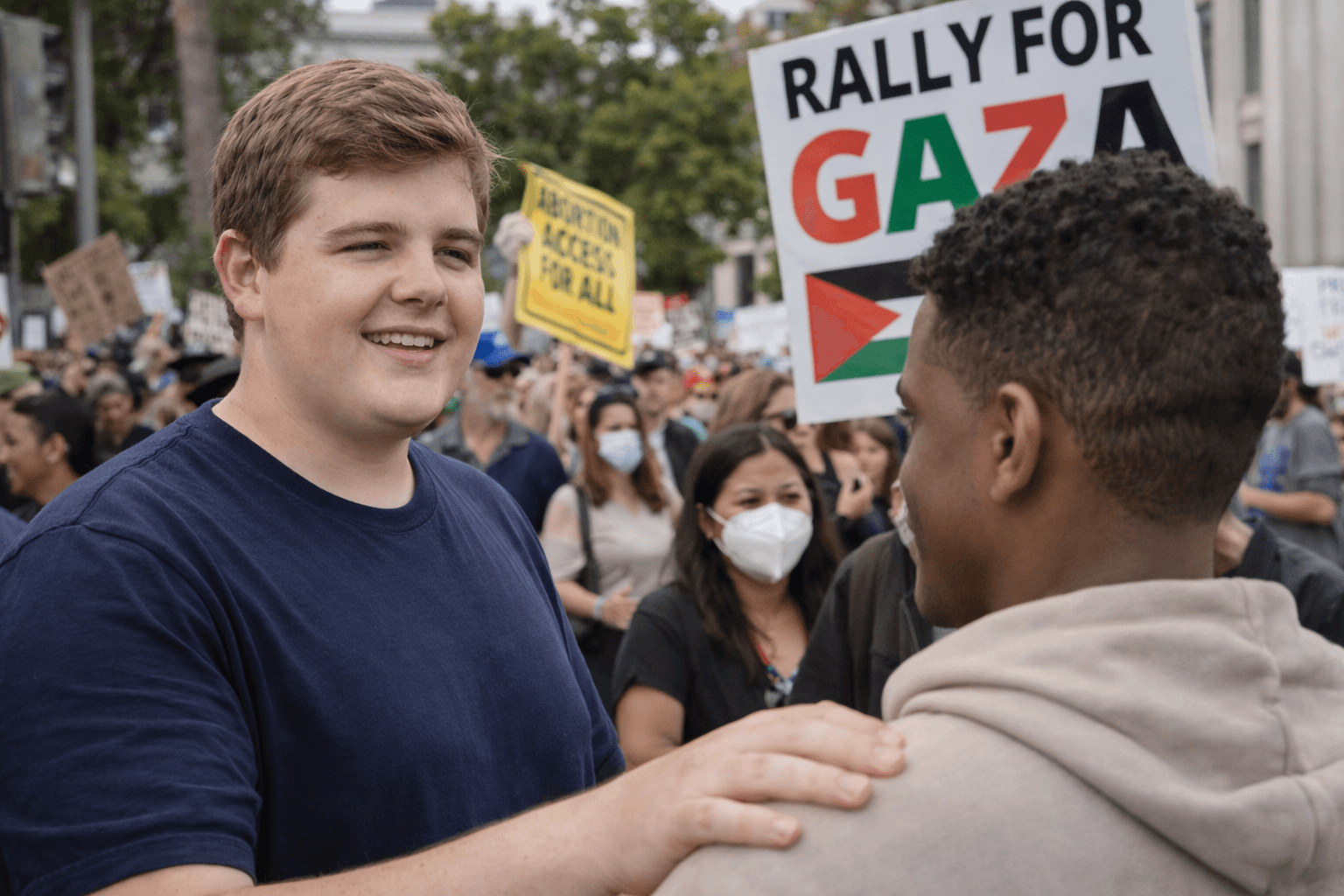
Surveillance Notes
I’ve learned not to trust first impressions—but I still write them down. Berkeley. Late afternoon. The kind of daylight that makes everything look honest even when it isn’t. John Hawthorne was easy to spot once you knew what to look for: standing left of center, relaxed posture, half-smile that didn’t quite match the noise around him. He didn’t look like a protester chasing a cause. He looked like a guy listening. That mattered. The crowd was loud—signs up, voices bouncing off old stone buildings. Gaza. Abortion access. A dozen overlapping reasons to be angry, hopeful, or both. John wasn’t holding a sign. That’s always a tell. People without signs are either lost… or paying attention. He was talking to someone younger, close, hand on the shoulder. Not aggressive. Familiar. The kind of contact meant to steady a conversation, not dominate it. Around them, faces blurred together—masks, phones, slogans—but John stayed anchored, calm in the middle of the churn. Sources later told me this was where lines crossed. Not officially. Not on paper. Just people who weren’t supposed to overlap, suddenly doing exactly that. No speeches. No chanting. Just proximity and timing. If this was a coincidence, it was a useful one. John Hawthorne didn’t look like a man making a statement. He looked like a man being seen—by the wrong people, at the right moment. And in my line of work, that’s usually where the story starts getting interesting.